Shawnee County Arrest Records
Shawnee County arrest records start with custody, but court charge records start when the prosecutor or another authorized charging authority files a formal allegation in court. That difference matters. A booking entry may show the arresting agency, booking number, booking date, agency code, warrant or case number, charge description, bond amount, bond type, court date, and court time. It may also show release information if the person has left custody. Those fields help identify the event, but they do not prove guilt.
The charge side is tied to Shawnee County District Court when a state criminal case is opened. The Criminal Department processes cases filed by the Shawnee County District Attorney and the Kansas Attorney General's Office. The District Attorney, Mike Kagay, is the local elected prosecutor whose office files most state charges in the District Court. Once charges are filed, the record may show the count, statute or description, hearing settings, bond, pleas, amendments, dismissals, and eventual disposition.
Booking records and custody status belong with the Shawnee County inmate search. The full criminal case file, plea, sentence, and final outcome belong with Shawnee County criminal court records. The arrest-to-charge path sits between those records.
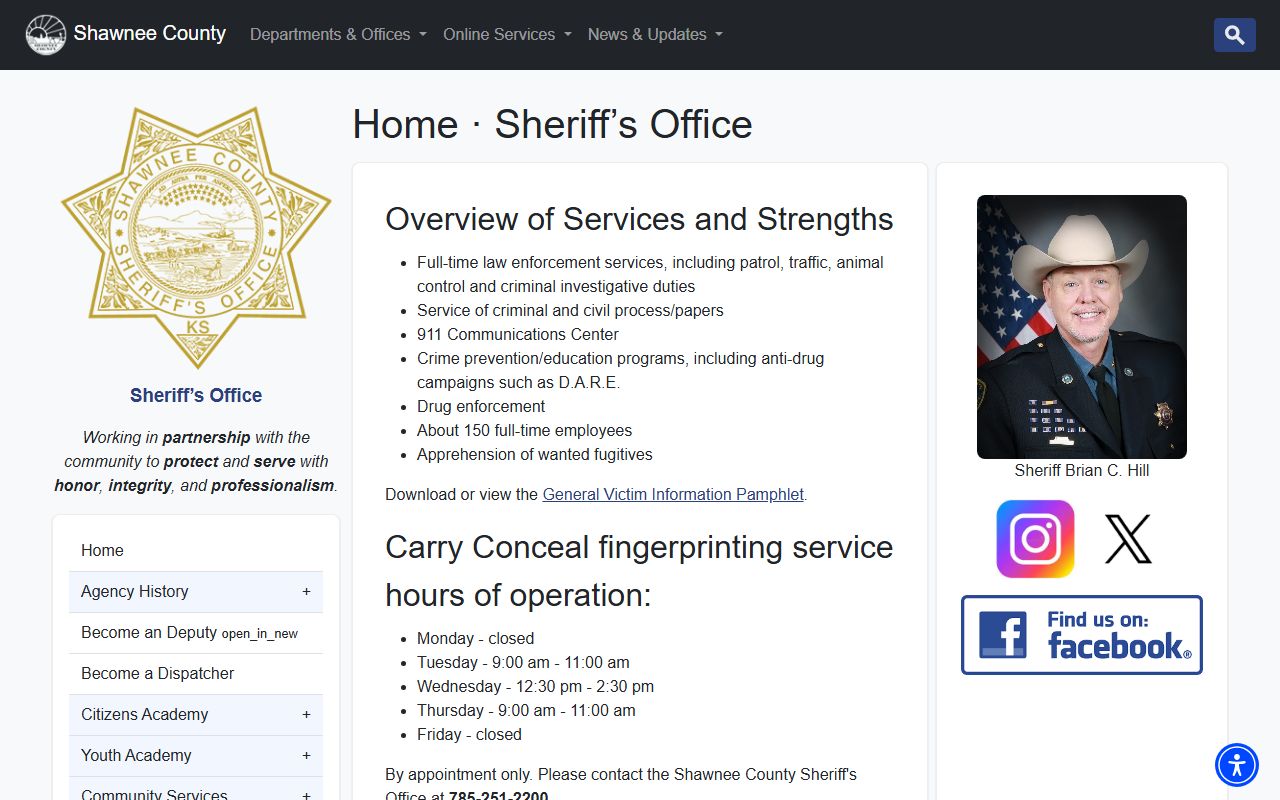
The Shawnee County Sheriff's Office page shows the county law-enforcement side, including Sheriff Brian C. Hill, civil and criminal process, warrants, investigations, and wanted-fugitive services.
Find Shawnee County Charges
Court charges after arrest are usually checked through the court record after the case is filed. Shawnee County District Court digital records are searched through Kansas Case Search or reviewed at public terminals outside the Clerk of the District Court's office. Older or copy-heavy requests move through the local KORA request process, with the Clerk of the District Court in Room 209 handling court records and copies.
- Start with the case number if it appears on a booking report, bond form, ticket, warrant notice, or court paper.
- Search by party name when the case number is missing, then confirm the court is Shawnee County District Court.
- Read the charge list by count, statute or description, severity, bond, hearing, and current status.
- Compare the court record to the jail booking report if the person is still in custody or was booked recently.
- Use the Clerk of the District Court KORA process for copies, certified copies, or older microfilm records.
Shawnee County also has a municipal split. Topeka Municipal Court handles city ordinance violations, traffic infractions, and misdemeanor ordinance cases filed there. The daily booking report can show Topeka bench warrants, but a city warrant or municipal charge may not appear the same way as a District Court criminal case.
Note: A court charge record may exist even when a person is no longer listed in current custody.
Shawnee County Charging Documents
A charging document is the formal paper that states the accusation. In Shawnee County District Court, the criminal file may include a complaint or information filed by the prosecutor, while an indictment is possible in cases that proceed through a grand jury. The research file confirms that local criminal records may include the complaint or information, charges, arraignment, plea, motions, orders, hearings, disposition, sentence, probation terms, warrant activity, and financial obligations.
| Document | Who Uses It | What It Does |
|---|---|---|
| Complaint | Prosecutor or law-enforcement supported filing | Starts or supports a criminal allegation and states the charged conduct. |
| Information | District Attorney or Attorney General | Sets out formal charges in many felony or misdemeanor District Court cases. |
| Indictment | Grand jury process | States charges returned through grand-jury action, often in more serious matters. |
The charging document is not the booking sheet. It is the court-facing allegation that the clerk processes into the case management system after filing. One arrest can lead to no filed charge, one charge, several counts, an amended filing, or charges in more than one court if separate city and state matters exist.
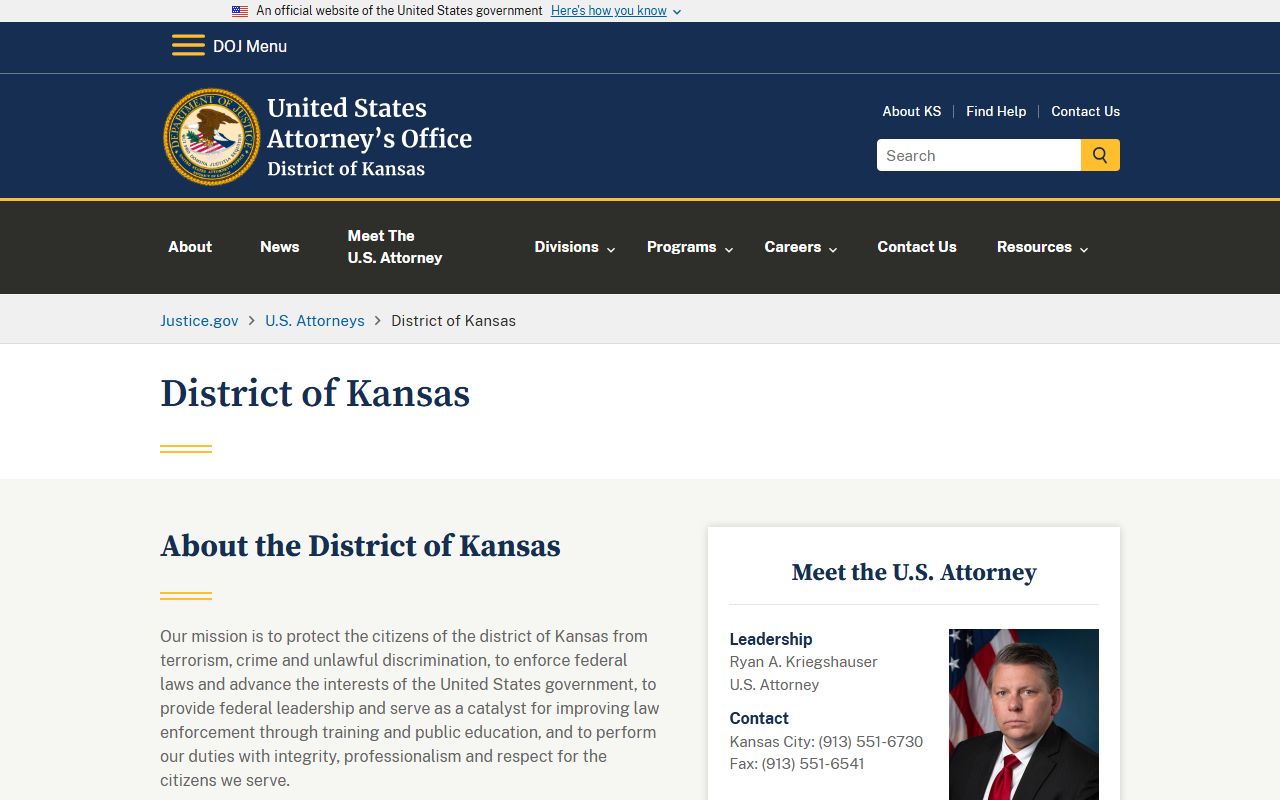
The U.S. Attorney's Office for the District of Kansas is a separate federal prosecutor, not the usual source for county District Court charges.
Shawnee County Booking Fields
The Shawnee County Department of Corrections daily booking report gives the most practical field list for the arrest side. It shows identity and booking data, then links that custody event to a warrant, case number, statute or charge description, bond, and court date. The inmate-search disclaimer states the system includes people sentenced, held for other jurisdictions, and accused but not convicted. It also states the public custody search is periodically updated and limited to people currently in Shawnee County DOC custody.
| Field | What It Shows |
|---|---|
| Name and booking number | The person listed and the local booking identifier. |
| Booking date and time | When the custody record was created. |
| Release date | Release information if the report includes it. |
| Agency, sex, race, DOB | Basic booking descriptors shown in the official report layout. |
| Warrant or case number | The court, warrant, traffic, or municipal reference tied to the hold. |
| Charge description | The listed statute or short charge text at the booking stage. |
| Bond and court date | Bond amount, bond type, court date, and time when present. |
The report examples include Topeka Bench Warrants, holds for another Kansas county, drug paraphernalia allegations, and shoplifting allegations. Bond types can include cash, no bond, and PS. Those terms should be read as current booking data, not as a final judgment.
Shawnee County Charge Status
A Shawnee County charge record changes as the case moves through court. The charge may begin as filed, then be amended, reduced, dismissed, or resolved by plea or trial. A charge may also be linked to an active warrant if a person misses court or if a judge orders arrest. District Court and municipal court matters should be kept separate because Topeka Municipal Court ordinance cases have their own court path and expungement statute.
| Status | Meaning in a Charge Record |
|---|---|
| Filed or pending | The charge has been filed and has not reached a final court outcome. |
| Amended | The prosecutor or court record has changed the charge, count, or wording. |
| Reduced | The charge has moved to a lower offense level or lesser allegation. |
| Dropped or dismissed | The court record shows the charge or case was not pursued or was dismissed. |
| Nolle prosequi | The prosecutor has declined to continue that charge, when that term appears in the record. |
| Warrant active | A warrant may be tied to the charge, usually requiring confirmation with the issuing agency. |
| Disposed | The charge has a recorded outcome, such as plea, verdict, sentence, or dismissal. |
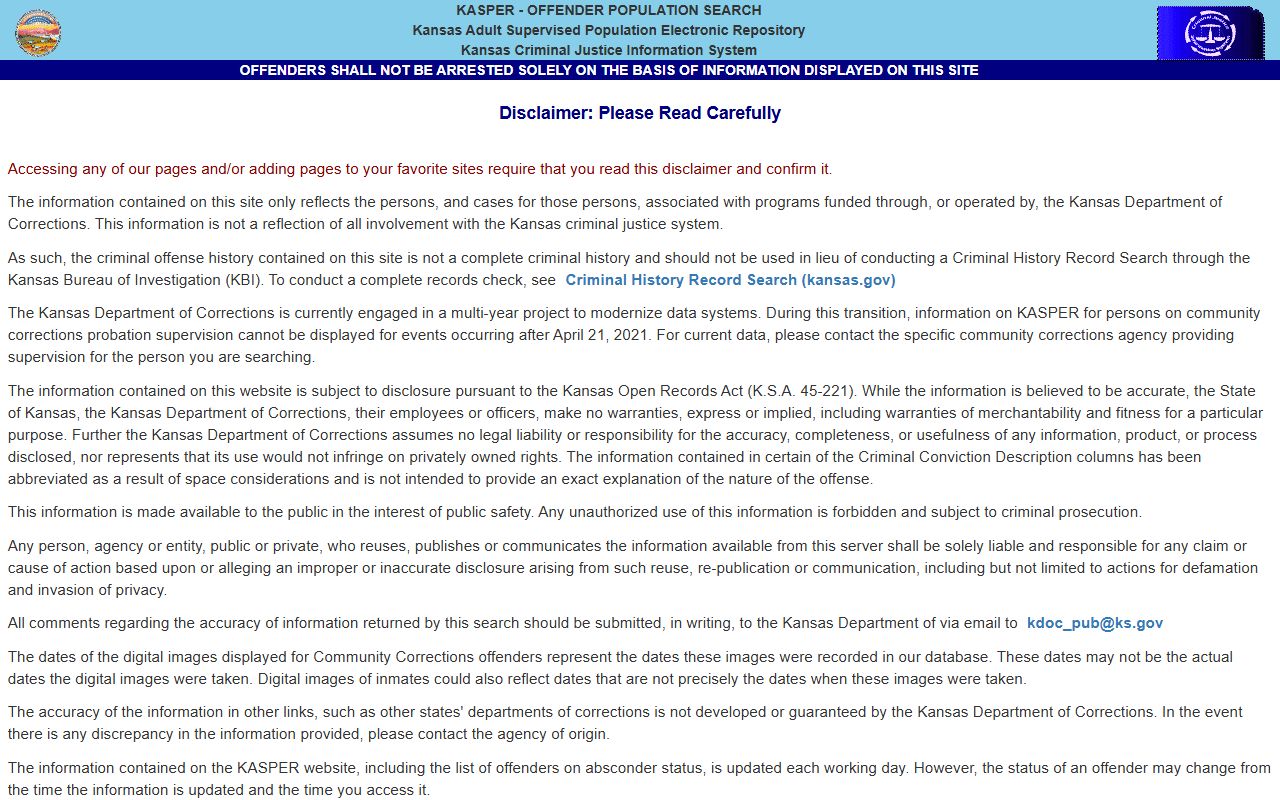
For statewide custody or supervision checks after a case leaves the local jail, use Kansas KASPER. KASPER is a Kansas Department of Corrections offender search. It is not the same as a Shawnee County booking report or the District Court case file.
Charge vs Conviction
A Shawnee County arrest record may list a charge soon after booking, but that is only an allegation. The court record must be checked for the plea, trial result, dismissal, sentence, or expungement order. The DOC inmate search itself warns that custody data includes people accused but not convicted. That warning should guide all arrest-record reading in Kansas.
| Point | Charge | Conviction |
|---|---|---|
| Record stage | Filed accusation after arrest or investigation. | Final finding after plea or verdict. |
| Where it appears | Booking report, warrant result, complaint, information, or case docket. | Disposition, judgment, sentence, and criminal-history records. |
| Meaning | The state alleges an offense. | The court has accepted or entered guilt. |
| Can change | Yes, it can be amended, reduced, or dismissed. | It can be appealed, corrected, sealed, or expunged if law allows. |
Victim notification uses a different system. The VINE service is linked from Shawnee County inmate tools for custody notification and status alerts, not for deciding guilt or reading the full court record. The Kansas Bureau of Investigation offender registry is also separate from a Shawnee County arrest record because it covers registry status rather than all charges.
Shawnee County Charge Limits
Kansas public access starts with the Kansas Open Records Act. K.S.A. 45-216 favors inspection of public records unless another law closes them. K.S.A. 45-218 sets request, inspection, response, and fee rules. K.S.A. 45-221 lists records that are not required to be disclosed and requires open and closed information to be separated when possible.
Arrest and charge records can still be limited. Juvenile records, adoption-related records, sealed cases, expunged records, medical or mental-health details, financial identifiers, protected addresses, and active investigative material may be withheld or redacted. Expungement of eligible Kansas convictions, diversions, and arrest records can be handled under state statutes, including arrest-record relief in District Court.
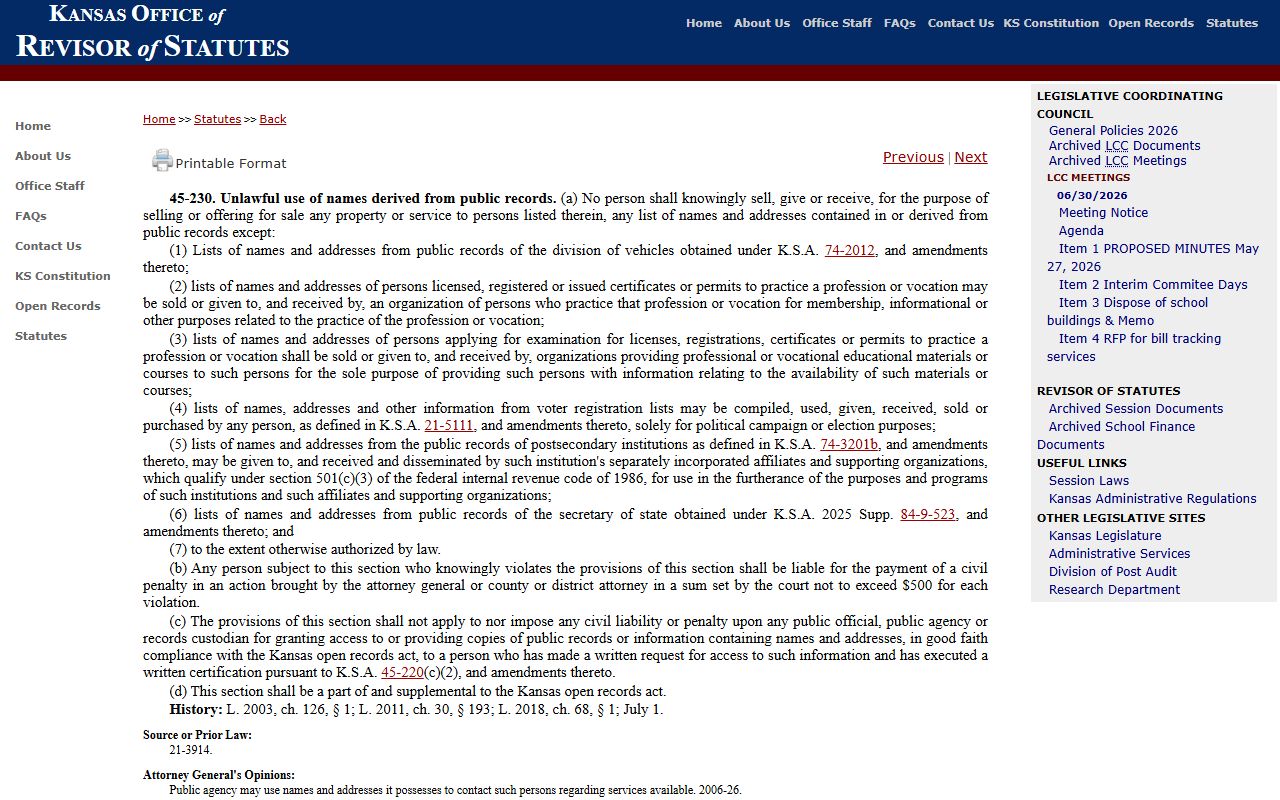
The KORA request form also requires certification about list use. K.S.A. 45-230 bars use of public-record name and address lists to sell or offer property or services.