
Shawnee County Criminal Records
A Shawnee County criminal court record is the District Court case file for a prosecution. The Criminal Department processes cases filed by the District Attorney and the Kansas Attorney General's Office. Those cases are primarily felonies and misdemeanors. The department issues documents, sets hearing times, and processes records for the court's case management system. Staff work with judges, assistants, attorneys, prosecutors, probation officers, the jail, and the public, but they cannot give legal advice.
The record focus is the full criminal case file. An arrest can lead to booking data, a warrant entry, or a jail report, but the criminal court record begins when a charging document opens or joins a court case. For the narrower arrest-to-charges pathway, use Shawnee County arrest records and court charges. For all case types, including civil, domestic, probate, and traffic, use Shawnee County court records.
The official Shawnee County Criminal Department page is the local source for how criminal records move through the clerk's office.
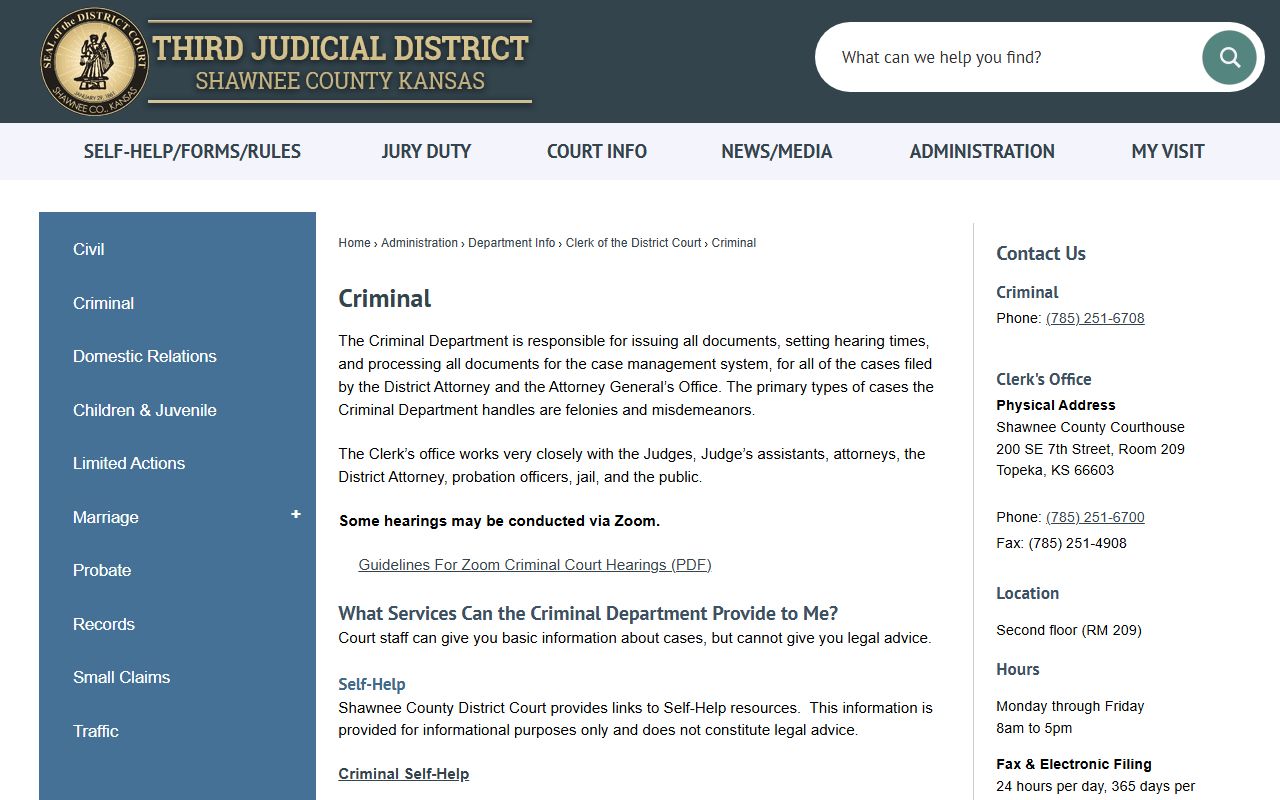
That department source anchors the distinction between a court case file and law-enforcement records, because the court file tracks hearings, filings, and dispositions after prosecution begins.
Search Shawnee County Criminal Court Records
The online starting point is Kansas Case Search, which the Shawnee records page identifies as the public channel for digital district court records. Search by case number if known. If the number is missing, use a party name. For a criminal matter, the party usually appears as State of Kansas versus the defendant. A search result may show the case number, party names, department, docket entries, hearings, disposition, and other public case information.
- Search Kansas Case Search by criminal case number or defendant name.
- Confirm that the result is a Shawnee County District Court case, not another Kansas county or a municipal matter.
- Review docket entries for charges, hearing settings, motions, plea, disposition, sentencing, and warrant activity.
- Use courthouse public access terminals when the public online result is incomplete or a document must be viewed in person.
- Submit the KORA form to the Clerk of the District Court for copies, certified copies, older records, or microfilm files.
Criminal records are digital from 2004 forward, while older criminal records may be on microfilm from 1885 through 2003. Mail copy requests usually require prepayment of a $20 research and copy fee. The Criminal Department phone is 785-251-6708, the Records phone is 785-251-6712, and the Clerk of the District Court main phone is 785-251-6700.
Shawnee County Criminal Case Flow
The criminal case record is best read as a timeline. It starts with a prosecutor-filed charge or charging document and moves through hearings and rulings. Some cases end by dismissal. Some end by plea. Some go to trial. If there is a conviction, the case record then moves to sentence, probation, restitution, costs, or other post-disposition entries. Bond and warrant facts can appear along the way.
Case flow: Charges Filed › Arraignment › Pretrial and Motions › Plea or Trial › Disposition › Sentencing
| Stage | What Happens |
|---|---|
| Charges Filed | The District Attorney or Attorney General opens or advances a criminal case in District Court. |
| Arraignment | The defendant appears and enters a plea or receives further court instructions. |
| Pretrial and Motions | Attorneys file requests, resolve evidence issues, discuss bond, and prepare for plea or trial. |
| Plea or Trial | The case resolves by plea, trial verdict, dismissal, or another court-approved disposition. |
| Sentencing | If convicted, the court imposes sentence, costs, restitution, probation terms, or custody conditions. |
The Shawnee County District Attorney is the local prosecutor's office for most state criminal filings in District Court.
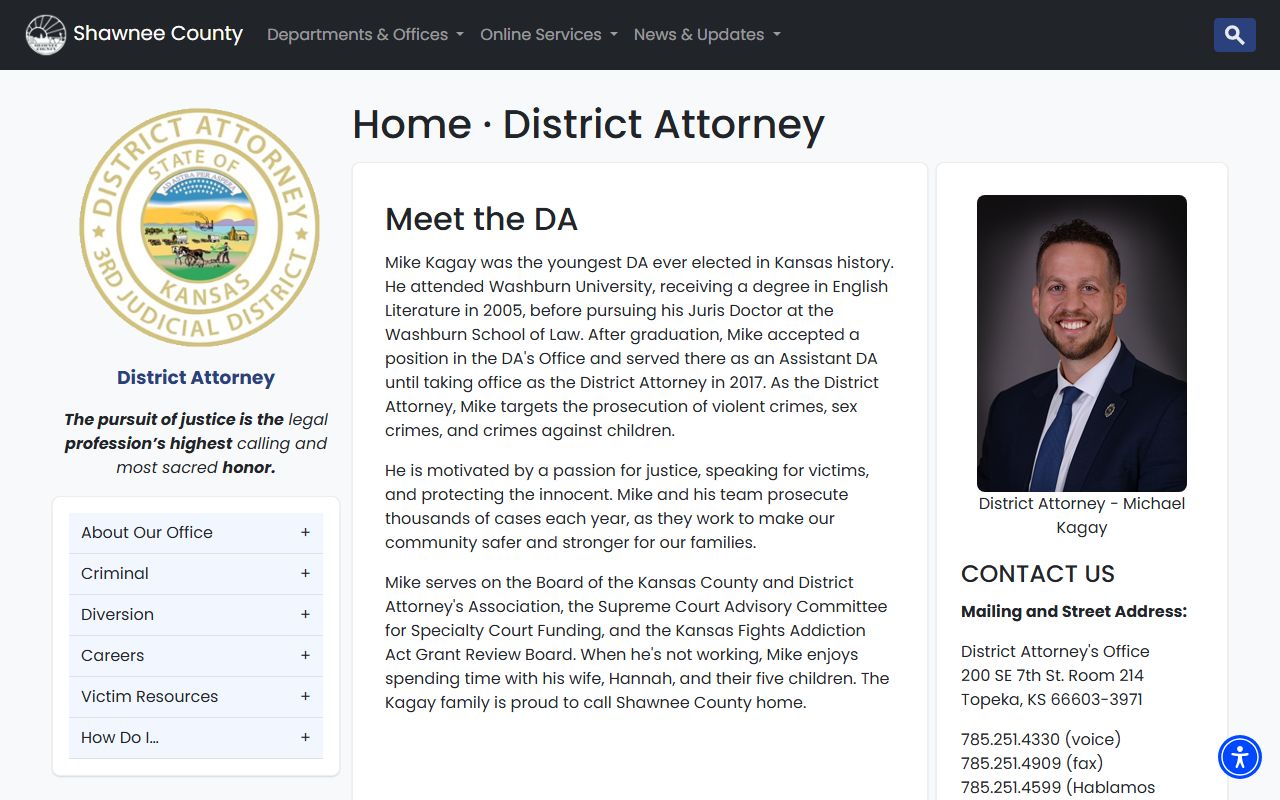
The District Attorney source matters because charges in the criminal case file are not clerk-created accusations. They are prosecution filings processed by the court after filing.
Shawnee County Criminal Record Fields
A criminal case file can include the complaint or information, charge descriptions, statute references, warrant or bond activity, arraignment entries, plea entries, motions, hearing settings, orders, trial entries, disposition, sentence, probation, restitution, and costs. Daily booking reports may show charge and court-date facts for a person in custody, but those booking fields do not replace the court case file. A person can be accused and booked without being convicted.
| Field | What It Shows |
|---|---|
| Case Number | The District Court identifier used for search, filings, docket review, and copy requests. |
| Defendant | The person accused in the criminal case, usually in a State of Kansas case caption. |
| Prosecuting Office | Whether the case was filed by the District Attorney or Attorney General's Office. |
| Charges | Offense descriptions, counts, statute references, amendments, reductions, or dismissals. |
| Bond and Warrants | Release terms, bond amount or type, bench warrant entries, and cleared or active warrant notes. |
| Hearings | Date, time, judge or division, courtroom, hearing type, continuance, Zoom note, or appearance entry. |
| Plea and Disposition | Guilty plea, not guilty plea, dismissal, verdict, diversion, judgment, or current outcome. |
| Sentence | Jail or prison term, probation, costs, restitution, conditions, or other court-imposed result. |
Charges vs Convictions
Charges and convictions are not the same. A charge is an allegation filed in court. It may be amended, reduced, dismissed, diverted, or resolved by plea or trial. A conviction is a legal outcome after a guilty plea, verdict, or other conviction-producing disposition. Shawnee County criminal court records may show both filed charges and final outcomes, so the disposition must be read before drawing conclusions from the charge list.
| Point | Charge | Conviction |
|---|---|---|
| Meaning | An accusation filed by a prosecutor. | A final or operative guilt outcome in court. |
| Where It Appears | Complaint, information, docket entry, booking report, or warrant context. | Disposition, plea, verdict, journal entry, or sentencing record. |
| Can Change | Yes, charges may be amended, dropped, or reduced. | Yes, later relief may include appeal, correction, or expungement if allowed. |
| Public Meaning | Does not prove guilt. | Shows a court outcome, subject to appeal or later relief. |
Note: Read the disposition and sentence before treating a Shawnee County charge entry as a final criminal outcome.
Public Access to Criminal Records
Public access to Shawnee County criminal court records follows Kansas public-record and court-record rules. K.S.A. 45-216 states the public policy favoring inspection of public records unless another law closes them. K.S.A. 45-218 sets the request and fee framework. K.S.A. 45-221 lists categories not required to be disclosed and supports separating open material from closed material. The court also applies sealing, redaction, juvenile, and expungement rules.
The clerk route matters when the online docket is not enough. Copies are requested through the KORA form, by mail or in person, and may require prepayment, copy charges, or staff-time fees. Public terminals outside the Clerk's Office are available for public records. Certified copies should come from the clerk, not a screen print. Criminal case records before the digital date range may need microfilm research.
Sealed vs Expunged Records
Sealed and expunged records are common points of confusion. A sealed record is closed from ordinary public inspection by law or court order. An expungement is court relief that limits public access to eligible records after statutory conditions are met. Shawnee County District Court lists expungement fee lines for conviction expungement and arrest expungement, and the research notes that the local fee schedule lists $195 for each.
| Point | Sealed | Expunged |
|---|---|---|
| Basic Effect | Public access is closed or limited by order or law. | Public access is limited after the court grants statutory relief. |
| Kansas Sources | May arise from statute, court rule, or case-specific order. | K.S.A. 21-6614 for many convictions, diversions, and related records. |
| Arrest Records | May be closed in some contexts if ordered or restricted. | K.S.A. 22-2410 governs eligible Kansas arrest-record expungement. |
| Who May Still See It | Courts or authorized agencies may retain access. | Law enforcement, courts, licensing bodies, or other entities may have access if statutes allow. |
The manifest image for K.S.A. 21-6614 shows the Kansas conviction expungement statute used for many criminal-record relief requests.
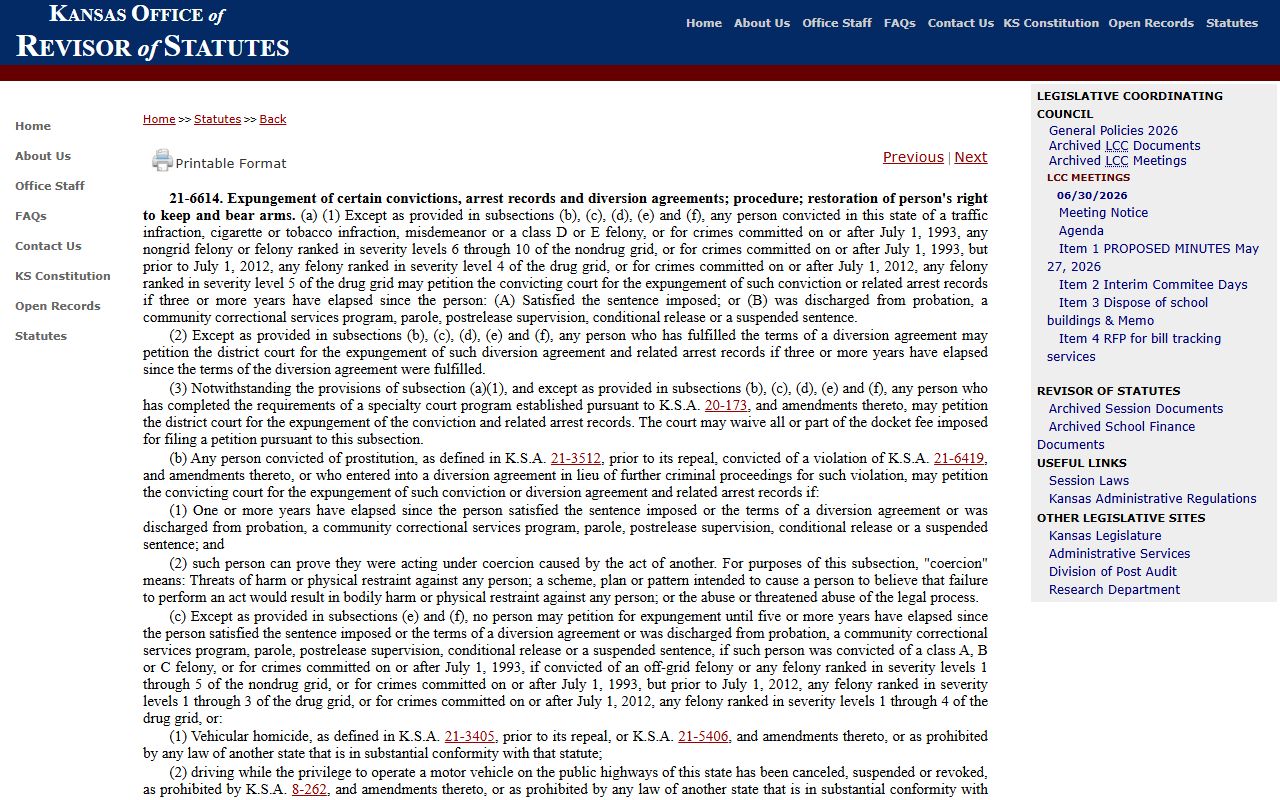
That statute is relevant after a conviction, diversion, or qualifying criminal record exists. It does not mean every Shawnee County criminal court record can be removed from public access.
The manifest image for K.S.A. 22-2410 shows the Kansas arrest-record expungement statute.
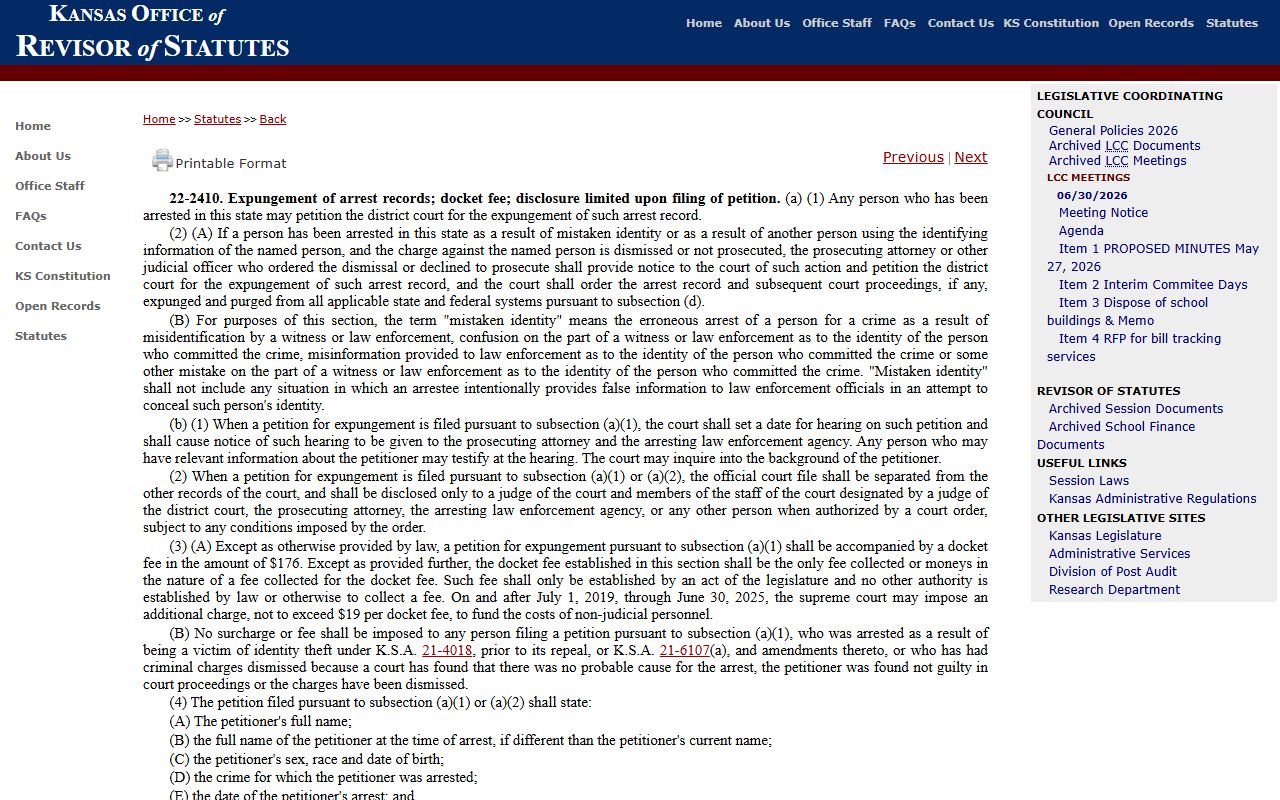
Arrest expungement is a different form of relief from conviction expungement, and the correct path depends on what the court record actually shows.
Restricted Shawnee County Criminal Records
Some criminal-related records are not public in the same way as adult felony or misdemeanor case files. Juvenile case records are confidential or restricted under Kansas juvenile law, and Shawnee's records chart lists juvenile records as confidential or not available. Adoption, mental-health, medical, care and treatment, protected address, and personal identifier information may be redacted or withheld. Sealed cases and sealed records are not available through ordinary Case Search or courthouse terminal use.
Statewide resources can be helpful but should not be confused with the court case file. The Kansas Bureau of Investigation registered offender registry is a separate offender registry, not a complete Shawnee County criminal case docket.
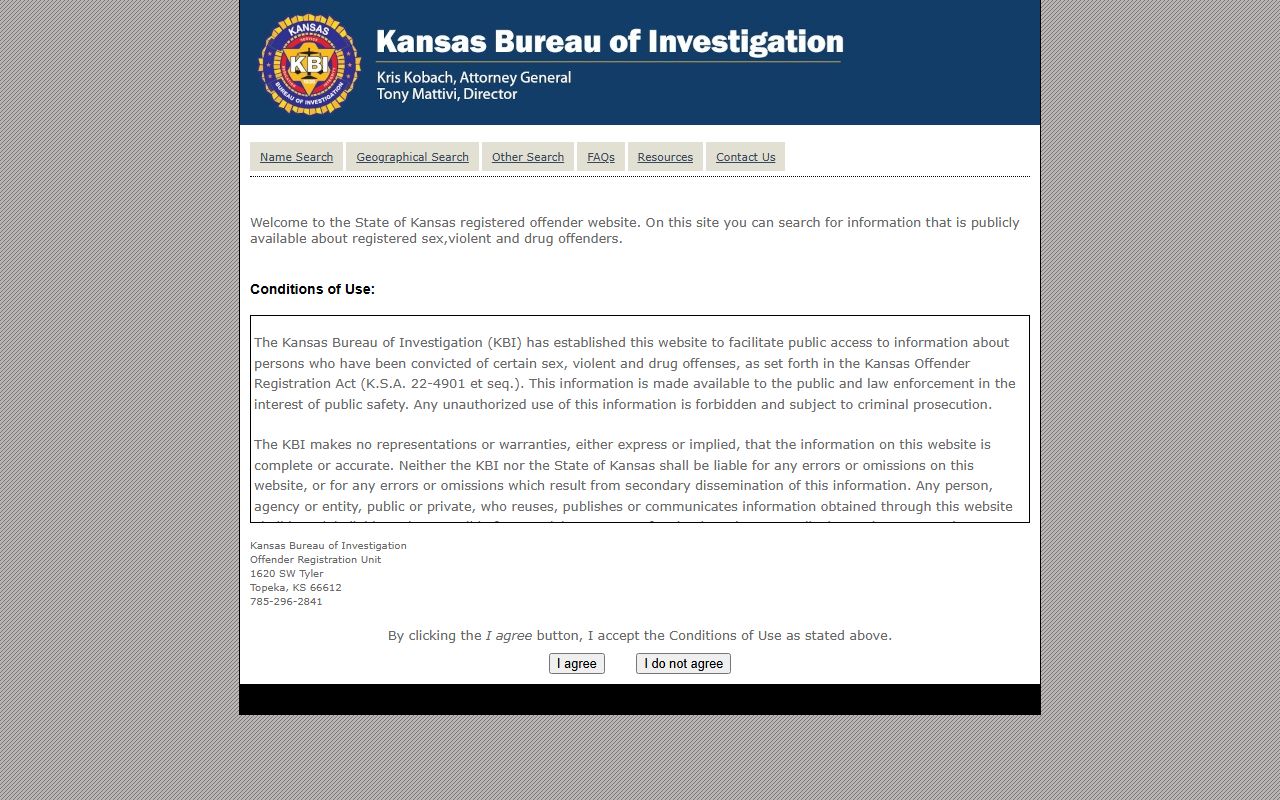
The registry may confirm registration information for covered offenders, but it does not replace the clerk's criminal court record for charges, motions, pleas, or sentencing documents.
Shawnee County Criminal Contacts
Criminal case records sit among several offices. The Clerk of the District Court keeps and copies the court file. The Criminal Department processes criminal case documents and hearing settings. The District Attorney files most state charges. The Third Judicial District Public Defender Office is part of the indigent-defense system for appointed counsel.
Criminal Department
Shawnee County Courthouse
200 SE 7th Street, Room 209
Topeka, KS 66603
785-251-6708
Monday-Friday, 8 a.m. to 5 p.m.
District Attorney
Shawnee County District Attorney's Office
785-251-4330
Prosecutes most state criminal charges in District Court.
Third Judicial District Public Defender
701 SW Jackson St, 3rd Floor
Topeka, KS 66603
785-296-1833
Chief Public Defender Danielle Hamilton Slate; Deputy Public Defender Michelle Neis.
The manifest image for the Third Judicial District Public Defender directory shows the official appointed-counsel office information for Shawnee County.
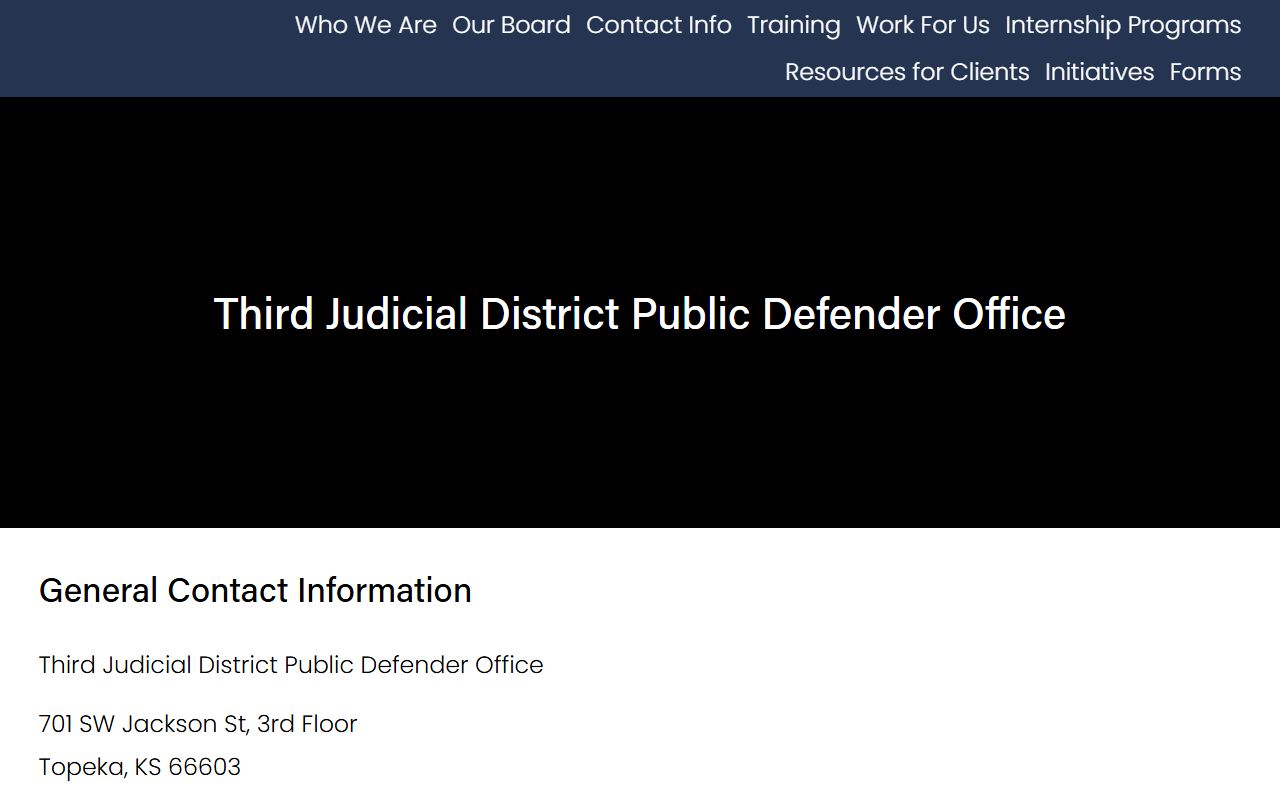
Public defender contact information helps identify the defense side of the criminal court process, but record copies still come from the Clerk of the District Court.